Positron emission tomography
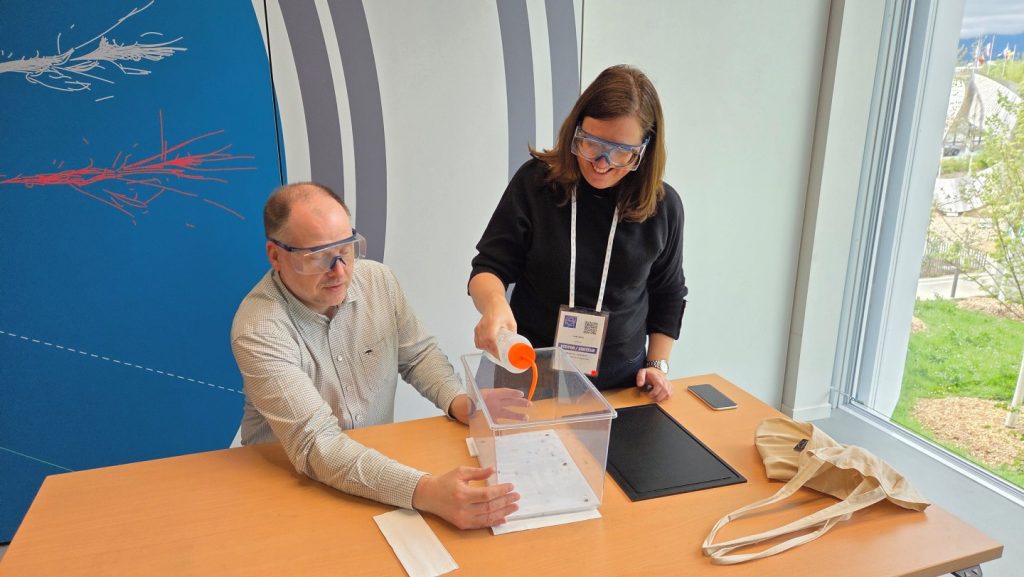
Lab workshop
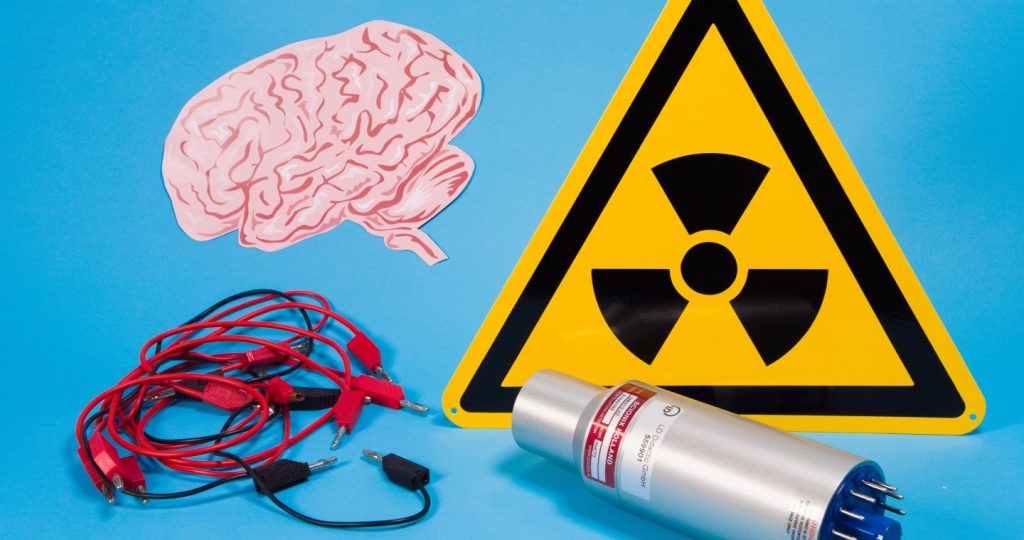
Use scintillation detectors to understand the basic principles of Positron-Emission-Tomography (PET) and locate a positron source.
Positron Emission Tomography is one of the most widely-used medical applications of particle physics and CERN has made major contributions to the development of this key technology.
PET scanners make use of the special properties of photons that are created when an electron meets its anti-particle, a positron, and they annihilate. By measuring photons produced during this annihilation, it is possible to locate a positron source in the human body. Typically, radioactively marked sugar molecules are used as positron sources to locate tumours in patients.
In this workshop, participants calibrate and use scintillation detectors to understand the basic principles of Positron-Emission-Tomography (PET). They apply their knowledge and locate a positron source (Na-22) inside a brain model, simulating a real medical application of PET scanning.

Age
Recommended for ages 17 to 19. Forbidden under 16 or for pregnant women due to the use of radioactive sources.

Duration
90 minutes.

Languages
Up to 30 languages for groups. This workshop is not proposed to individual visitors.

Accessibility
Pushchair and wheelchair accessible. More details
Take it further